
How to replicate the success of Cuphead
What two brothers proved about differentiation and positioning in the video game industry.

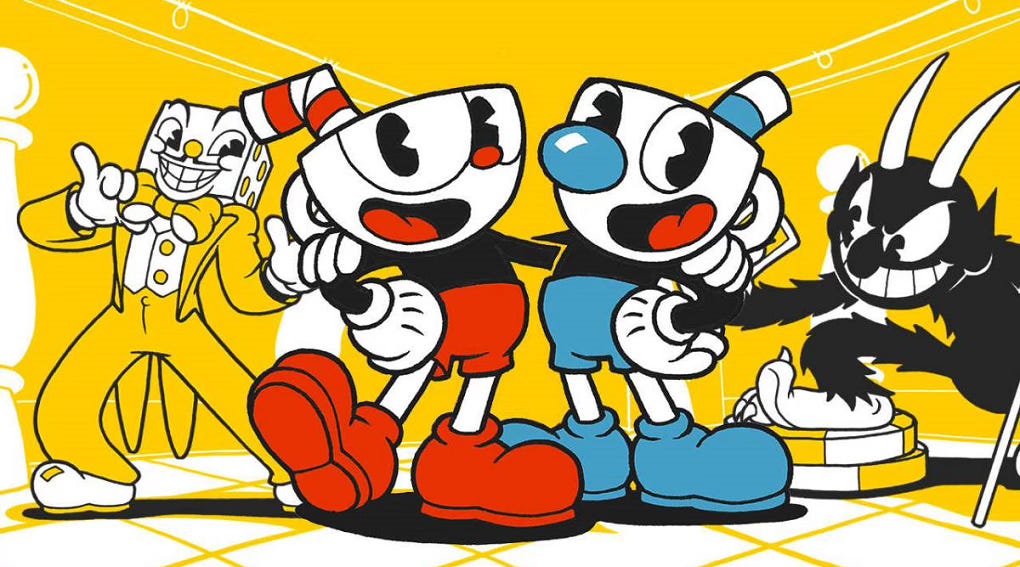
What happens if you take a classic run-and-gun game and merge it with the design of American 1930s cartoons?
It was the same question that the Canadian brothers Chad and Jared Moldenhauer asked themselves. The answer was Cuphead, the brilliant video game released in 2017 that sold over one million copies worldwide in the first two weeks.
In an era where the main trends were realistic 3D, VR, and AR, the Moldenhauer brothers dared to stand on the opposite side of the spectrum.
Because it's about courage.
You need the courage to pursue your vision, no matter how many naysayers tried to dissuade you, saying that a 2D game would never succeed in today’s market.
You need the courage not to pay too much attention to what has or hasn’t sold in the past. They had a very clear vision and they were not distracted by people saying: “2D animation is dead, platformers are trash, nobody likes boss rushes, the game is too hard, make it easier to reach more people.”
You need the courage to differentiate and keep your focus.
A new category: 1930s cartoon games
In Cuphead, players take control of the titular character or his friend Mugman while travelling the game's world. After Cuphead loses a bet to the Devil, he must find a way to repay his debts. During an interview with Joystiq, co-creator Chad Moldenhauer said StudioMDHR wanted to avoid the "classic save-the-world/princess" theme. They wanted to differentiate from the usual stereotype.
The game was inspired by the rubber hose style of animation used in American cartoons of the 1930s, such as the work of Fleischer Studios and Walt Disney Animation Studios, and sought to emulate their subversive and surrealist qualities.
Cuphead goes through grotesque scenarios, sometimes disturbing monsters, and a nostalgic atmosphere capable of catapulting the player into a black-and-white cartoon of almost a century ago.
To take their focus to the extreme, they decided to make the game just as if they were producing it at that time.
Everything in the game is done classically, for the most part. Everything is hand-drawn on paper, hand-inked, and all the backgrounds are watercolour paintings. In some places, there are even actual physical models.
The gameplay runs at a framerate of 60, while the animation runs at 24, which is the film standard.
They drew each frame and scanned it into the computer. The only cheat they used was colouring digitally, but only because they did a test with hand-painted colours and couldn’t tell the difference. Therefore, they decided to shave off five years of development time.
Creating a completely hand-drawn game is no easy task for a major studio, let alone two brothers who had never made one before.
But it was perfectly consistent with the focus chosen by the Moldenhauer brothers.
Each element of Cuphead was conceived, designed, and created to be perceived as completely different from any game seen up to that moment. The art style is highly unique by modern-day standards.
Even the music is inspired by the soundtracks of the most famous cartoons of the time and vinyl records listened to by Americans in that decade. Therefore, it focused entirely on jazz, a musical genre that projects the player into the grey New York of the 1930s. Nearly three hours of custom-composed jazz and ragtime music were created, using an ensemble of nearly 40 musicians.
When the first trailer was presented at Microsoft's E3 2014 press conference, Ben Kuchera of Polygon wrote that Cuphead was one of the five most interesting games, even though he knew little about the game other than its aesthetic. He said it "stood out immediately" and that everyone in the website's press room reacted well to the trailer.
Cuphead has been a smashing success since its release, even garnering an animated Netflix show starring Cuphead and his brother Mugman.
How was this success possible?
If you follow this blog, you already know the answer. The Moldenhauer brothers positioned Cuphead in the player’s mind as the first game of a new category: 1930s cartoon games.
I know what you are thinking now.
“Wait a moment, Federico. That’s true, but I don’t think differentiation and positioning are the main reasons for their success. They had a big publisher behind them, Microsoft. They got a lot of money.”
Well, that’s not true. I mean…it’s true that Microsoft backed their project.
But they didn’t pitch their idea to Microsoft. They didn’t spend precious time and money participating in some crazy Indie Pitch Festival. They didn’t sell out their dreams to publishers.
Firstly, they started operating with limited resources: from time, to staff, to budget. They had no funding, so they spent every weekend, day and night designing the game.
Secondly, Microsoft called them. They just posted a video on the message board NeoGAF. Alexis Garavaryan, [Senior Manager of Worldwide Business Development] at Microsoft, found the message and contacted them.
It’s not luck. Maybe it’s luck for someone who doesn’t understand the power of positioning. Not to me.
They stressed their differentiation so much that the game inspired people from around the world to share their love for the characters and old cartoons themselves.
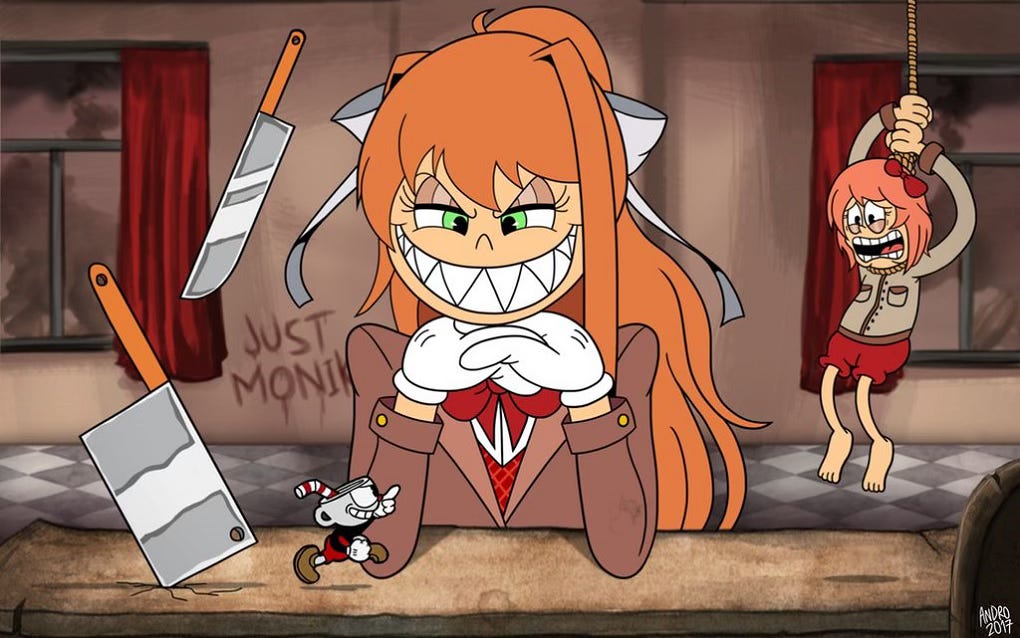
And when your differentiation is so strong that you create a new category and become first in the player’s mind, then any other game that comes later becomes automatically a rip-off, even if it wasn’t intentional.
I’m talking about Enchanted Portals, a game whose gameplay bears a striking resemblance to Cuphead’s signature animation. Some players have posted on Twitter side-by-side comparisons of Cuphead and Enchanted Portals to demonstrate the similarities.
The Moldenhauer brothers were also smart enough not to fall into the line-extension trap. As they said in an interview:
“I know the appropriate thing that a company does is work on a second game before you’re done launching. But we were 100% focused.”
They never set out to create an empire; they wanted to make a game, and they kept their focus on it.
And above all, they worked their butts off. You must have faith in yourself and in the process. You must have clear objectives, and you must work hard. In the end, what you put in is what you get out. There is no elevator to success, especially in the video game industry.
Observe what everyone else is doing, and do the opposite
In summary, they took the highway in the wrong direction...only to find that at the end of the crazy race there was a pot full of gold. Just like in the movie Ready Player One.
The story of Cuphead confirms that no form of entrepreneurial success can exist without your ability to differentiate yourself, to distinguish yourself, and to make yourself the clear preference for a very specific target of players.
Positioning is the key to achieving this result.
It will help you figure out if what you are doing will really work or not. It will decide whether you will continue to waste money or if that money will multiply in your bank account almost like magic.
Do you know someone blindly following the industry crowd instead of daring to stand out? Share this article with them before their game becomes just another copy.
If you enjoyed this article, click on the button below and subscribe to get more lessons on how to make your game stand out and succeed.
To the success of your game.